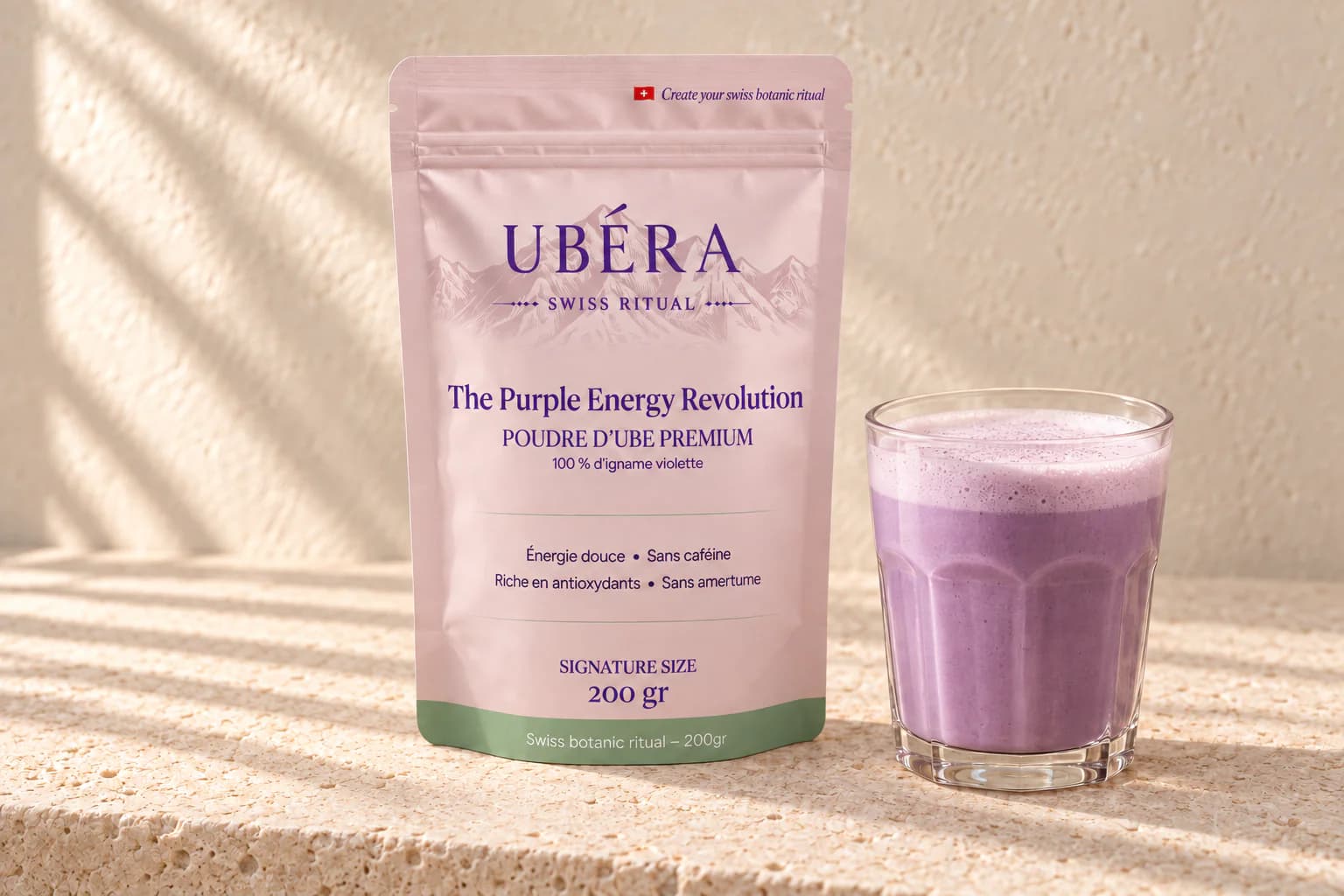
A truly unique tuber.
Ube, scientifically named Dioscorea alata, is a yam — a tuberous plant of the Dioscoreaceae family. It is a distinct botanical species, grown in Southeast Asia for centuries for its intense purple colour and its soft texture.
A light vanilla sweetness that opens onto notes of roasted hazelnut, almond and pistachio. Unlike beetroot, there is no bitterness. Its firm flesh keeps all its character when cooked — which makes it an ideal ingredient for a creamy, balanced latte.
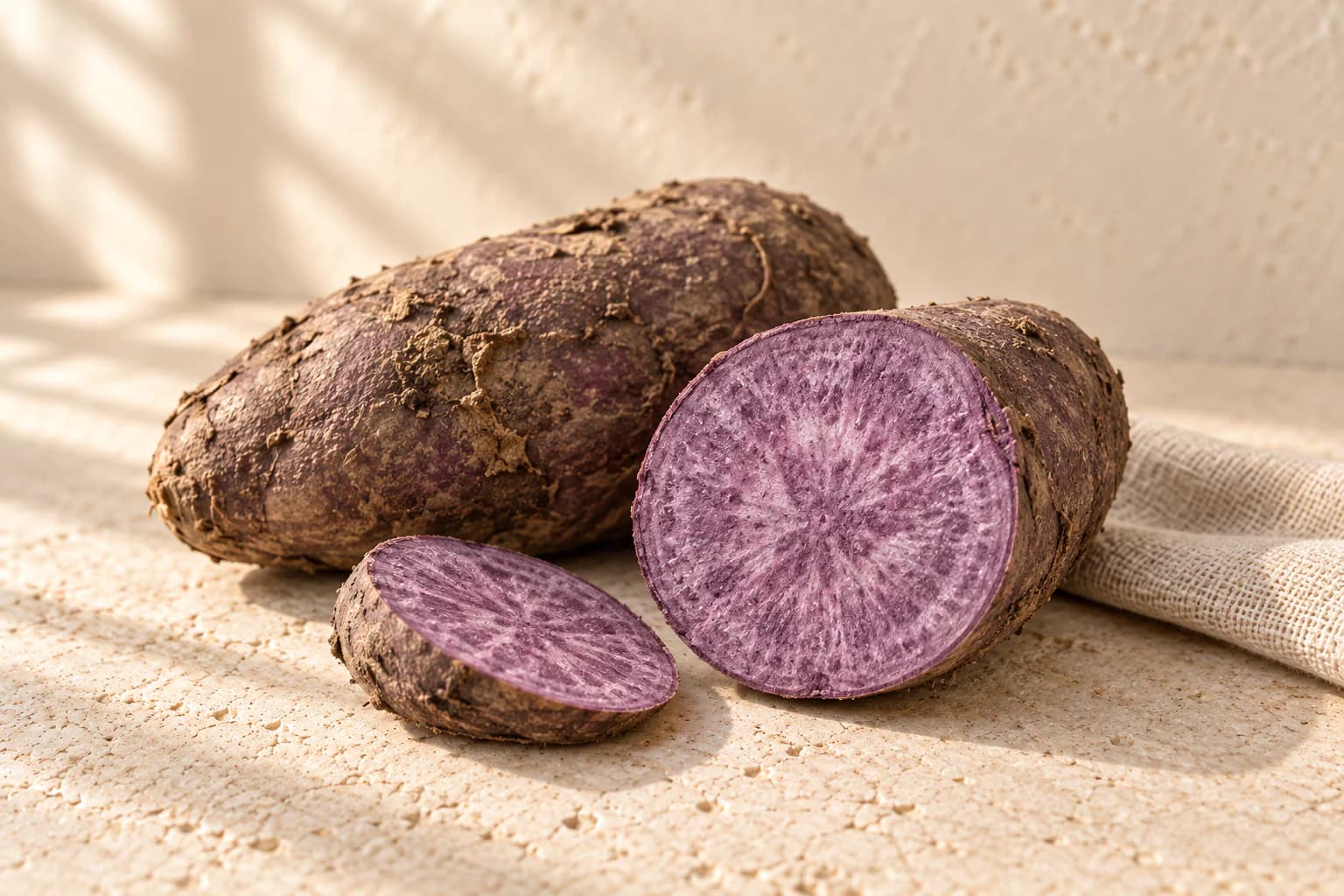
Origin
Southeast Asia — grown for centuries in the Philippines, Vietnam and Thailand.
Family
Dioscorea alata — Dioscoreaceae family (yams). A distinct botanical species.
Taste
A light vanilla sweetness that opens onto notes of roasted hazelnut, almond and pistachio.
A deep purple, of plant origin
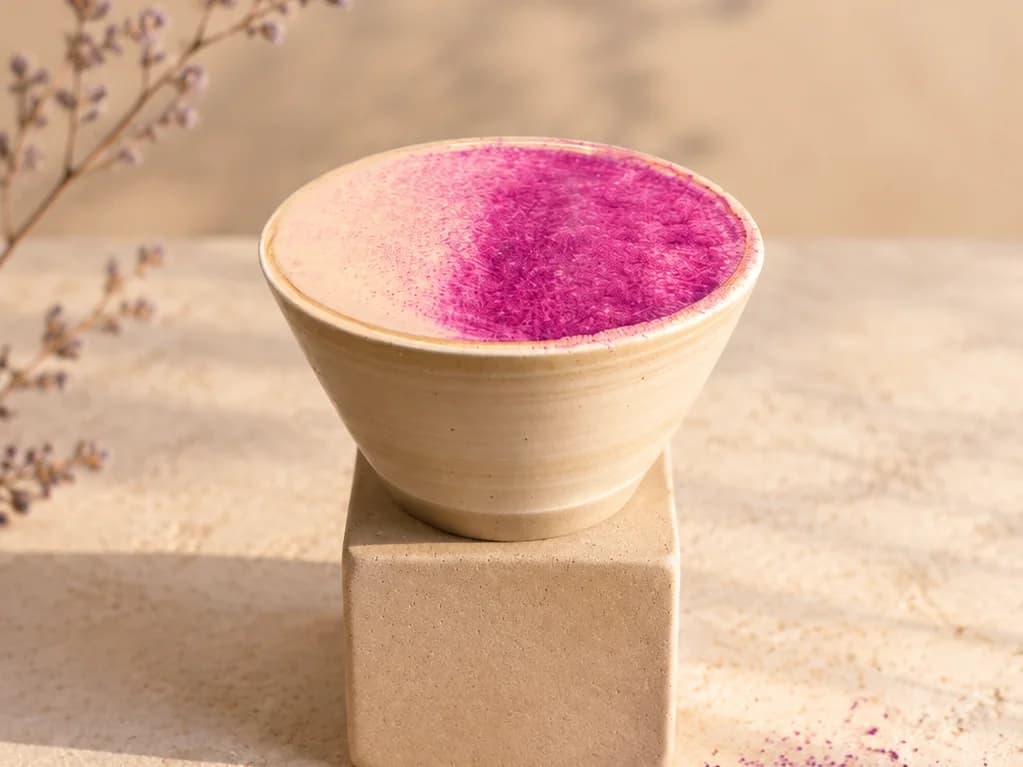
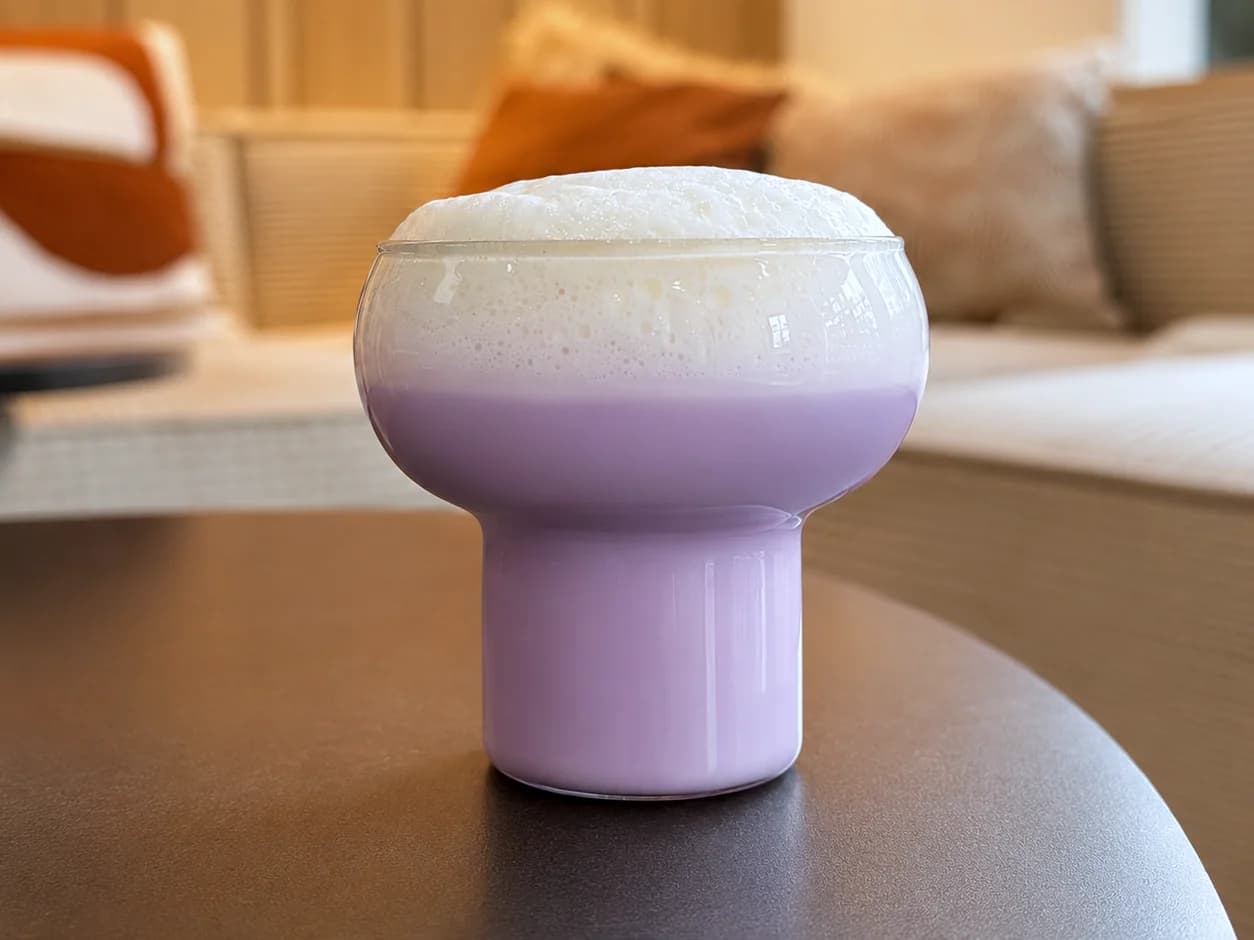
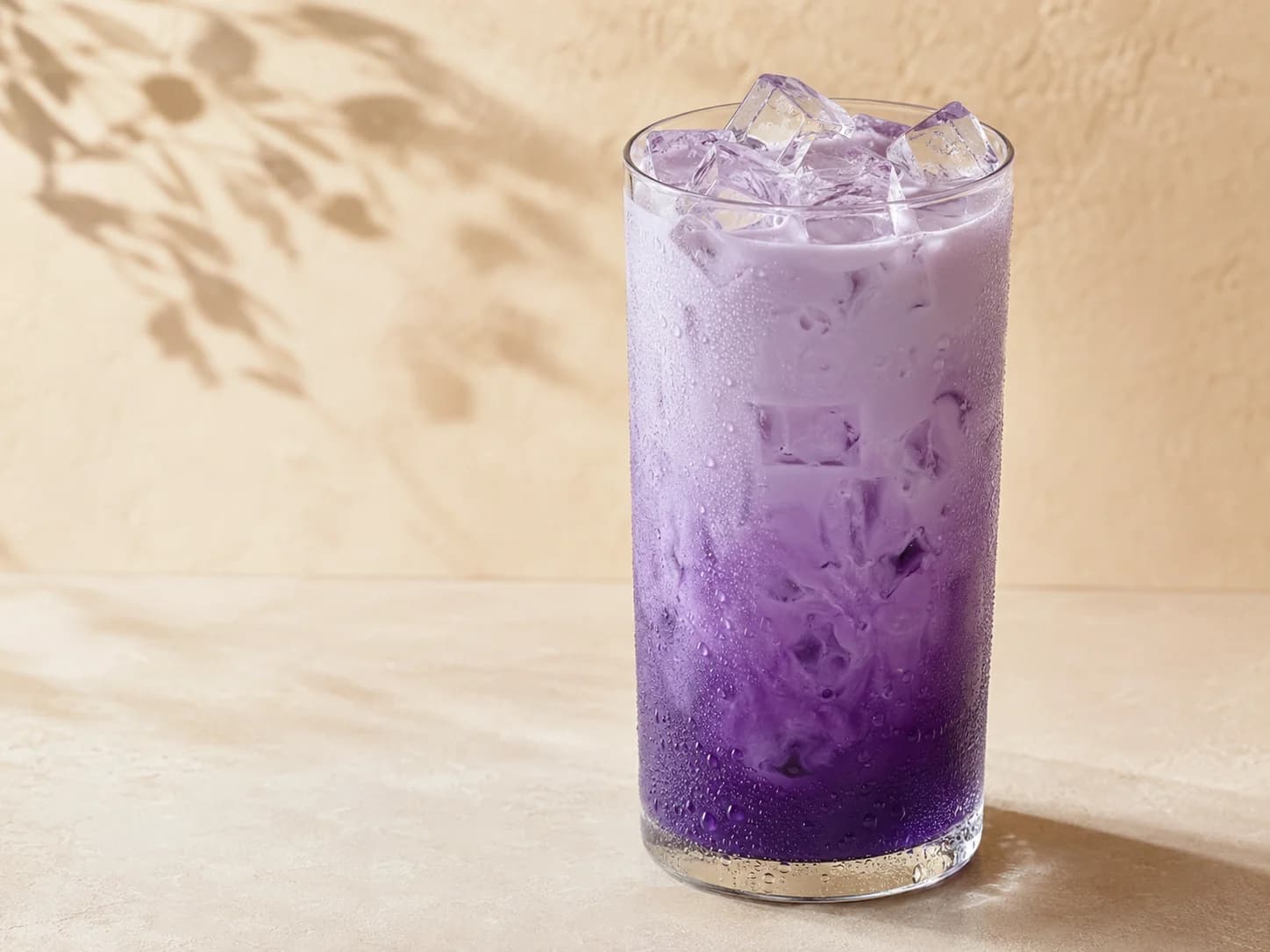
The vibrant purple colour of ube is 100% natural. It comes from plant pigments present in the flesh of the tuber. These pigments give the drink its signature hue, with no colourant added whatsoever.
That original colour is preserved by the drying and milling carried out upstream, in the country of origin, which keep the tuber’s natural pigmentation intact.
A traditional ingredient, reimagined.
In the Philippines, ube is a cornerstone of traditional pastry. It goes into iconic desserts such as halo-halo (a layered iced dessert), ube halaya (ube jam), and countless festive pastries.
In recent years, ube has crossed culinary borders. It appears in the cafés of Los Angeles, London and Paris, as lattes, modern pastries and artisan ice creams. UBÉRA is part of that evolution, with a Swiss approach: purity of the product, minimalism in the preparation, exacting sourcing.
Frequently asked questions
Is ube a yam or another tuber?
Ube is a yam (Dioscorea alata), from the Dioscoreaceae family. It stands apart from other purple tubers with a milder, rounder taste and naturally vanilla-like notes.
Does ube contain caffeine?
No, ube contains no caffeine. UBÉRA is a caffeine-free alternative to coffee, to be enjoyed at any time.
Is the purple colour natural?
Yes, 100%. It comes from the plant pigments present in the flesh of the tuber. No added colourant.
Where does ube come from?
From Southeast Asia — mainly the Philippines, Vietnam and Thailand, where it has been cultivated for centuries.
How is “ube” pronounced?
“Oo-beh”, in two syllables. The word comes from Tagalog, the language of the Philippines.
What is ube powder?
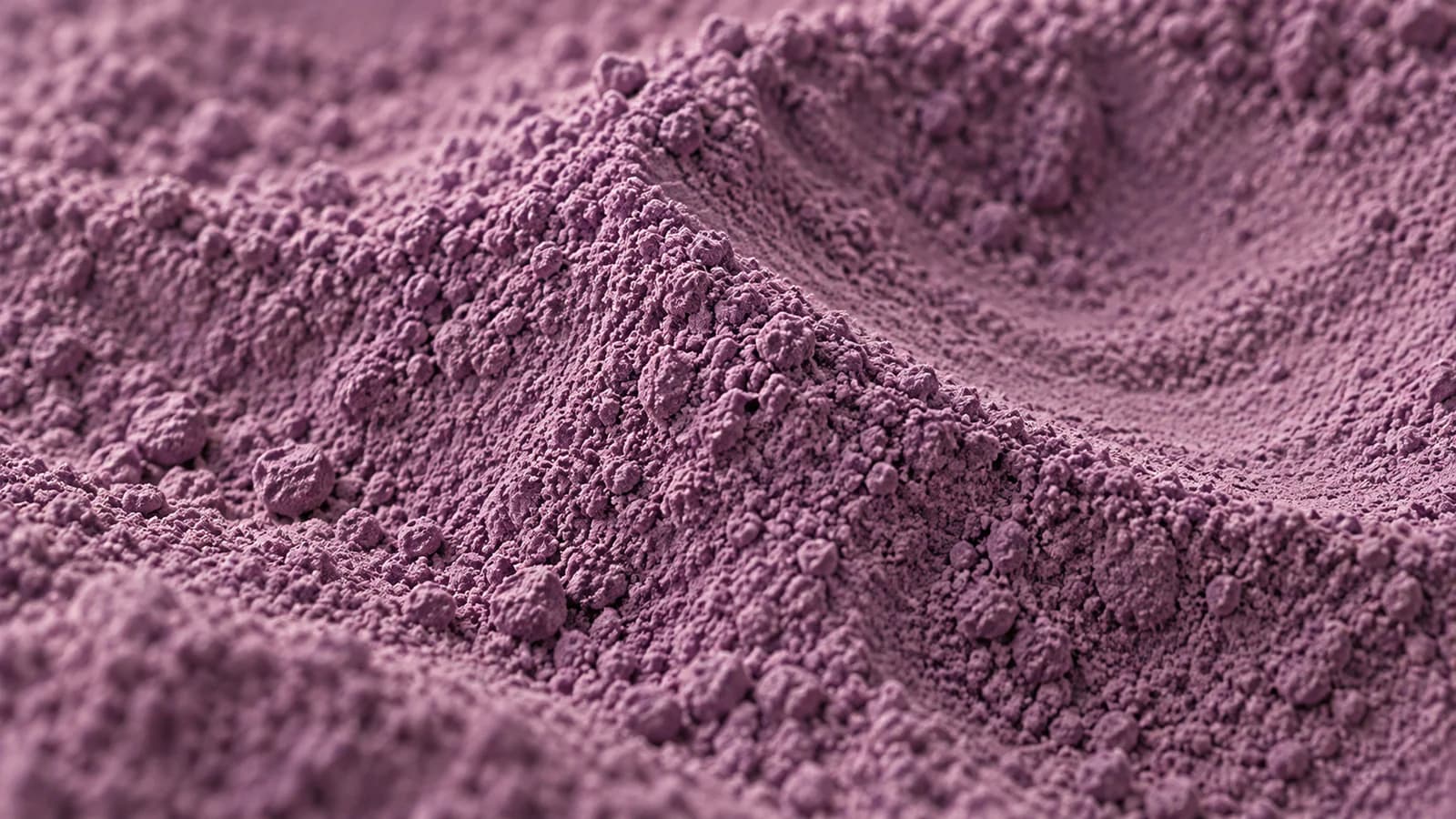
Purple yam, dried and ground into a fine powder — nothing else. Keep it dry in its resealed pouch, and it takes a minute to prepare: 5 g whisked into hot or cold milk makes a naturally purple, caffeine-free latte. The same powder also flavours smoothies, pancakes and desserts.
Is ube the same as taro?
No. Ube is a yam (Dioscorea alata); taro is a plant from another family (Colocasia esculenta). Both are used in desserts, hence the confusion, but their flesh, taste and texture differ.
Ready to taste?