Ube or matcha: which latte should you choose?
One is purple and gentle, the other green and grassy. Ube and matcha are both whisked and both end up in a cup of frothy milk, yet they are neither the same plant, nor the same taste, nor the same drink: one is a root, the other a tea. Here is how to choose, or bring them together.
In short
- Ube is a purple yam (Dioscorea alata) ground into powder: a gentle, vanilla-like taste, no caffeine.
- Matcha is a Japanese green tea ground into a fine powder: a vegetal, umami taste, with caffeine.
| Criterion | Ube | Matcha |
|---|---|---|
| Origin | Purple yam from the Philippines | Shade-grown green tea leaves, Japan |
| Plant | Dioscorea alata, a tuber | Camellia sinensis, the tea plant |
| Colour | Natural purple | Bright green |
| Taste | Light vanilla sweetness, roasted nuts | Vegetal, umami, slight bitterness |
| Caffeine | None | Yes, like all tea |
| Preparation | Mixed into a splash of warm liquid, then milk | Whisked in water at about 80 °C, then milk |
| When | Any time, evenings included | Rather during the day |
Taste: dessert versus garden
Ube powder makes a round latte, with a light vanilla sweetness that opens onto notes of roasted hazelnut, almond and pistachio; it is easily enjoyed without sugar. Matcha is livelier: grassy, with umami depth and a hint of bitterness that depends on its quality and the water temperature. Ube often wins over those who find matcha too vegetal; matcha lovers find in it a complementary sweetness.
Caffeine, the real difference
Matcha is tea: it contains caffeine, like coffee or black tea. Ube is a tuber: it contains none. That is often what decides the moment: a matcha in the morning, an ube latte in the afternoon or evening, when you want a hot drink without caffeine.
Preparation, the same gesture
Both powders are whisked. For ube, mix 5 g of powder into a splash of warm liquid until smooth, then add about 200 ml of hot or cold milk. Matcha is whisked in a little hot, never boiling, water before the milk goes in. One bamboo whisk does both.
Why choose? Both in one glass
Ube and matcha layer beautifully: purple at the bottom, milk in the middle, green on top. Our ube matcha latte gives the quantities: 5 g of ube, half a teaspoon of matcha and 180 ml of milk.
Our matcha partner: Maison Genkai
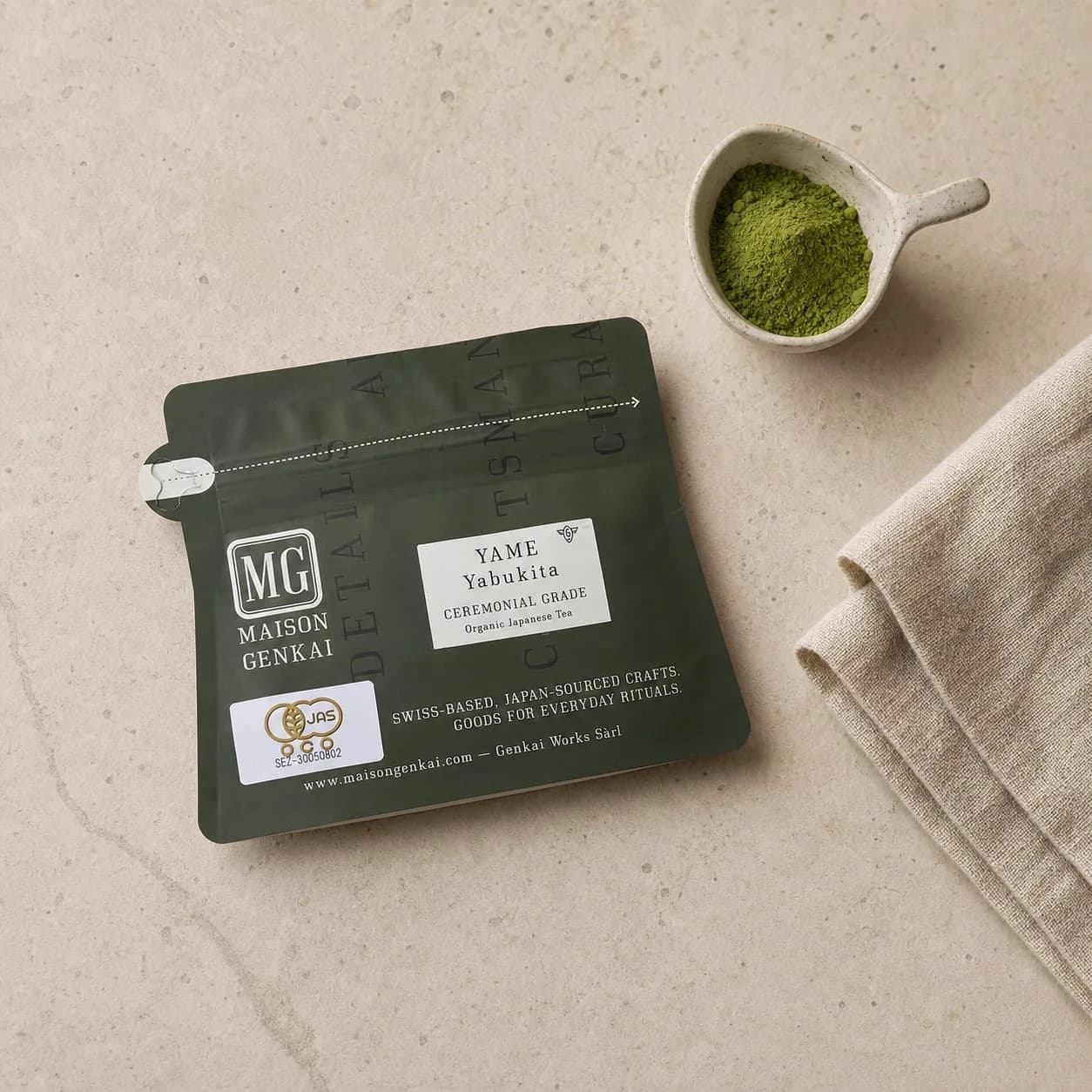
For matcha, we recommend Maison Genkai, a Swiss house based in Colombier (Neuchâtel). It sources its matcha and hojicha directly in Japan, including organic matcha from Yame, and ships from its stock in Switzerland, for home drinkers and cafés alike. Paired with ube powder, its matcha makes a two-tone latte, purple and green.
Visit the Maison Genkai shop →Maison Genkai is a business partner of UBÉRA.
Frequently asked questions
Does ube contain caffeine?
No. Ube is a yam, neither tea nor coffee: ube powder is naturally caffeine-free. Matcha is a tea and does contain caffeine.
Does ube taste like matcha?
No. Matcha is vegetal and umami, with slight bitterness; ube offers a light vanilla sweetness that opens onto notes of roasted hazelnut, almond and pistachio. They share the whisking and a striking colour.
Can you mix ube and matcha?
Yes, it is even a classic: both powders mixed separately, then layered with milk in a glass.
Do you need a different whisk?
No. The same bamboo whisk works for both; an electric frother works too.